Yılmaz Büyükerşen Wax Museum in Eskişehir
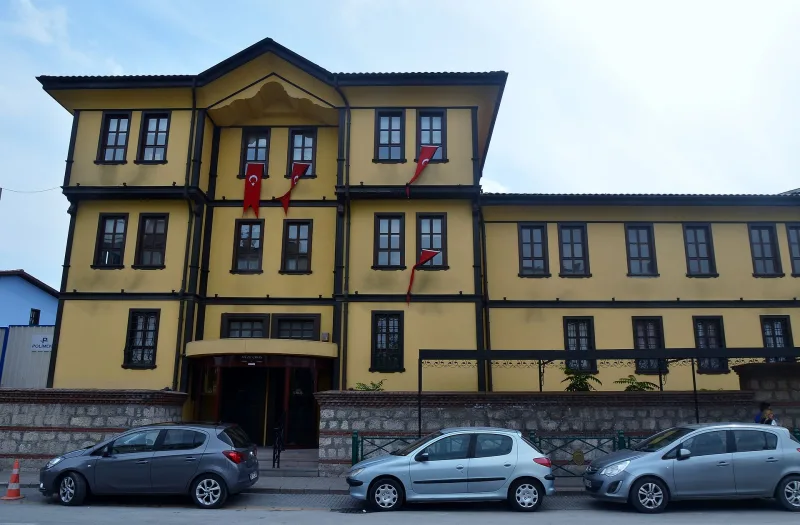
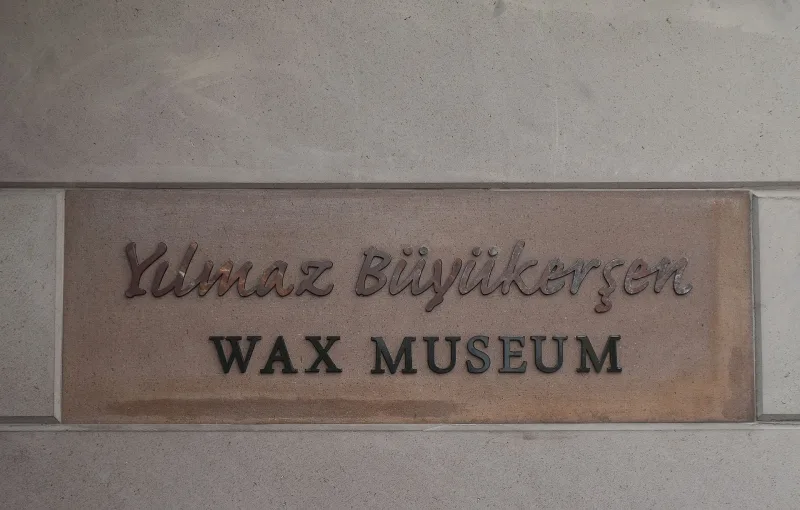
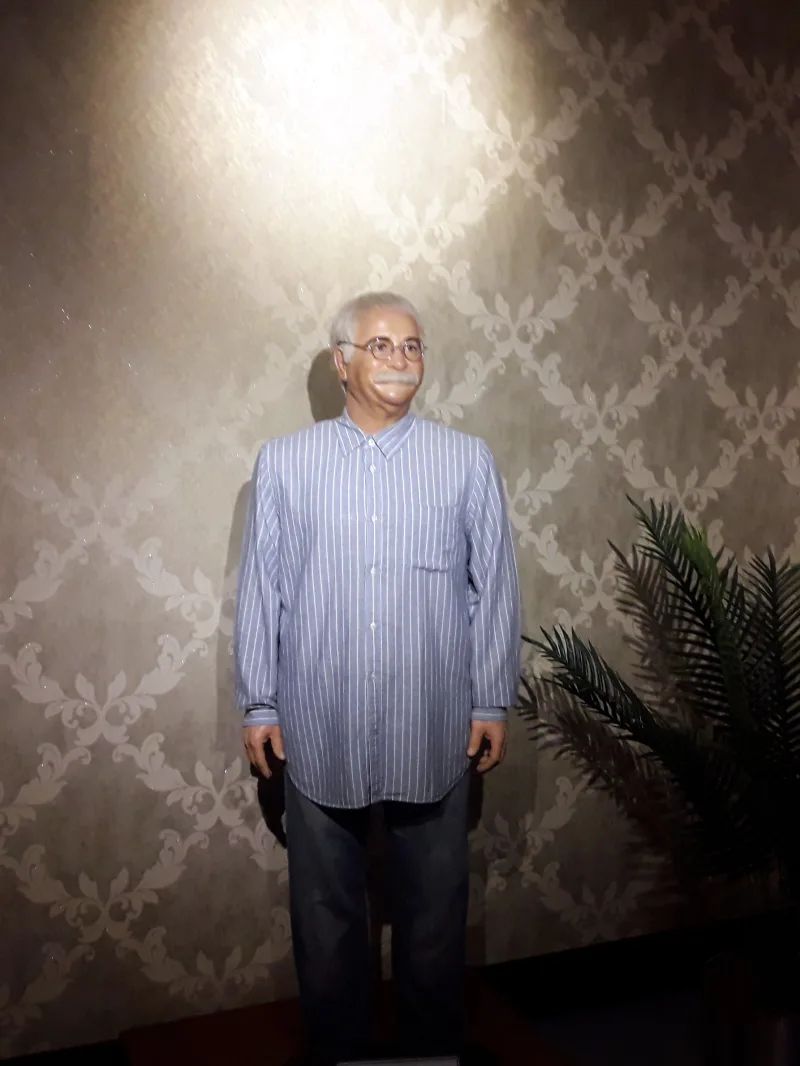
The Yılmaz Büyükerşen Wax Museum (Yılmaz Büyükerşen Balmumu Heykeller Müzesi) is the only museum of its kind in Turkey and one of the main cultural landmarks of the city of Eskişehir. Five halls house a collection of 198 wax sculptures, ranging from Atatürk and the Ottoman sultans to Yunus Emre, Marilyn Monroe, and Barış Manço. The museum is remarkable above all because its creator—the current mayor of Eskişehir, Dr. Yılmaz Büyükerşen, an economist and self-taught sculptor—personally sculpted many of the figures. This is a rare example of an artist’s museum where the creator’s personality is no less compelling than the exhibits themselves. The museum opened on May 19, 2013, and quickly became a must-see stop on the tour of “rehabilitated” Eskişehir—a city that Büyükerşen transformed from a provincial center into one of Turkey’s most well-maintained small capitals.
History and Origins
The museum’s history is inseparable from the biography of its founder. Yılmaz Büyükerşen was born in 1937 in Eskişehir, earned a doctorate in economics, served as rector of Anadolu University, and was one of the “fathers” of Turkish distance education. Since 1999, he has served as the city’s mayor from the Republican People’s Party. Alongside his administrative career, Büyükerşen was seriously engaged in sculpture and became fascinated with wax modeling in the 1980s. In 1996, he opened a small gallery of his wax works on the campus of Anadolu University, which served as the prototype for the future museum.
By the early 2010s, Buyukershen’s collection already numbered several dozen figures, and Eskisehir’s popularity as a tourist destination was rapidly growing. The city administration allocated a building on Ataturk Boulevard in the historic part of Odunpazari, and on May 19, 2013, the museum opened to the general public. The date is symbolic: May 19 is a national holiday in Turkey, marking the start of the War of Independence and Atatürk’s arrival in Samsun in 1919. Thus, the museum’s mission was set from the very beginning: the history of Turkey—from the Ottoman Empire to the republic and modern culture—told through faces and perspectives.
Over the years, the collection has expanded: new characters have been added, sets have been redesigned, and interactive scenes have been introduced. All proceeds from the museum, by decision of the municipality, are directed toward the education of girls and students with disabilities. This has made the project not only cultural but also social—a rare configuration for Turkish municipal institutions.
Architecture and What to See
The museum is located in a modern building on Atatürk Boulevard in the Odunpazarı district—within walking distance of other attractions: the historic quarter of the same name with its Ottoman wooden houses, the Porsuk River, and the promenade with gondolas. The permanent exhibition occupies five halls (A, B, C, D, E), each with its own theme. The figures are placed in realistic settings, with stage lighting and sound effects—this is not a static gallery, but a series of staged scenes.
Hall A: Atatürk and the Ottoman Empire
The main hall is dedicated to Mustafa Kemal Atatürk, his family, and the War of Independence. It also houses the “Gallery of Sultans”: Mehmed II the Conqueror, Selim I the Grim, Suleiman the Magnificent, as well as lesser-known rulers, including Fatih and Abdul Hamid II. Historical scenes have been reconstructed: a young Atatürk at his desk in Samsun, a ceremonial reception at Dolmabahçe Palace. The figures are rendered with ethnographic precision—from the embroidery on the caftans to the metal details of the weapons.
Hall B: Science, Sports, Art, and Media
The most “diverse” hall. It features Turkish and international figures from aviation, railways, journalism, industry, science, and sports. Alongside them are stars of Turkish pop music and cinema: Cüneyt Arkın, Barış Manço, Kemal Sunal, and Zeki Müren. Among the foreign figures are Marilyn Monroe, Albert Einstein, and world leaders of the 20th century. The hall’s concept is to showcase the multi-layered nature of Turkey’s modernization, where “local” and “foreign” names coexist within a single cultural memory.
Hall C: Historical Figures
This hall is dedicated to heroes of the distant past. Here stand Yunus Emre—a 13th-century Anatolian mystic poet whose verses formed the basis of the Turkish literary language—and Nasreddin Hodja—the archetypal folk sage with his donkey. Nearby are scholars of the early Islamic era, travelers, and reformers. This is the museum’s “genealogical” hall, answering the question: on whose shoulders does modern Turkish identity stand?
Hall D: Democracy
The most controversial and, at the same time, the most emotional hall. Themes include the formation of Turkish republican democracy, the multi-party system, and key events of the 20th century. By the author’s decision, photography is prohibited here: visitors are invited to spend 10–15 minutes inside in complete concentration. This is a rare decision for a modern museum, and it works: the hall is perceived as a space for personal reflection.
Hall E: The Artist’s Personal Exhibition
The final hall is dedicated to Yilmaz Büyükerşen himself. On display here are his tools, sketches, photographic documentation of the figure-making process, and self-portrait wax sculptures. This is a rare opportunity to see behind the scenes and understand just how painstaking the work is: it takes the master 4 to 6 months to complete a single figure.
Interesting Facts and Legends
- Yilmaz Buyukershen is the only sitting mayor of a major city in the world who personally creates museum-quality wax sculptures. Many of his party colleagues and opponents have personally posed for him for future exhibits.
- All of the museum’s proceeds go toward scholarships for female students and students with disabilities. This decision is enshrined in the founding documents and is not subject to changes in municipal leadership.
- The opening date—May 19, 2013—coincides with the start of the Turkish War of Independence. This symbolism is specifically highlighted in the main hall’s exhibition.
- Büyükerşen’s wax figures were exhibited in Ankara, Istanbul, and abroad long before the permanent museum opened. According to expert assessments, his technique is similar to that of Madame Tussauds, but with greater attention to the details of national costumes.
- Photography is prohibited in the Hall of Democracy—it is the only museum hall in Turkey with a complete ban on photography for conceptual rather than security reasons.
- Thanks to projects such as this museum, the Porsuk River Promenade, and Sazova Park, Eskişehir earned the unofficial title of “the Turkish Salzburg” in the 2010s—for its focus on urban design and cultural institutions.
How to get there
The museum is located in Odunpazarı—the historic center of Eskişehir—on Atatürk Boulevard. Look for the pedestrian zone between the Porsuk River promenade and the neighborhood of old Ottoman houses. It’s a 10–15-minute walk to the museum from anywhere in the center. Address: Atatürk Bulvarı, Odunpazarı, Eskişehir.
Eskişehir is a major transportation hub in Central Anatolia. The most convenient way to get there from Istanbul is by YHT high-speed train (about 3 hours); from Ankara, it takes 1.5 hours by YHT. The local Hasan Polatkan Airport primarily handles domestic flights. It is about 2 km from the train station to the museum: you can walk there in 25 minutes along the Porsuk River promenade or take a taxi (a short ride). It is convenient to get around the city by modern tram; the “Şarhöyük” or “Atatürk Lisesi” stops are the closest to the museum.
Tips for travelers
The museum is open almost year-round, usually Tuesday through Sunday; it’s best to check the exact schedule on the Eskişehir Municipality website (esmek.eskisehir.bel.tr) before your visit. It is closed on Mondays. Allow 1.5–2 hours to explore all five halls: there is a lot to see, and you’ll want to linger at every exhibit.
The best time to visit is in the morning on weekdays or in the afternoon after 4 p.:00 when school groups have already left. On weekends and during Turkish holidays, there are often lines at the ticket counters. Tickets are usually inexpensive (by Turkish standards), and the proceeds go toward scholarships. The museum is ideal for families with children: colorful figures, easy-to-understand scenes, and interactive elements. In Hall D, be sure to remind your children—and yourself—that photography is prohibited.
The museum can easily be combined into a single itinerary with other “signature” attractions in Eskişehir: the Odunpazarı district with its colorful wooden houses and the Museum of Contemporary Glass, Sazova Park with its castle and zoo, the Porsuk River promenade with its Venetian-style gondolas, and the Lületaşı Museum, dedicated to Eskişehir’s famous decorative stone. To fully explore the city, you should set aside at least a day and a half to two days, and Yilmaz Buyukershen’s wax museum is a must-see and the most personal stop on this itinerary: nowhere else in Turkey will you find such a seamless fusion of urban policy, art, and social mission in a single exhibition.